 Producing the Goods
Producing the Goods
Serpentine Lighthouses
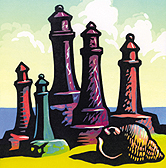
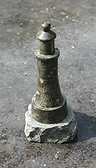
Serpentine is a marble found on the Lizard peninsula in Cornwall named after its resemblance to mottled snake skin. The stone is unique in that it contains more variety of colour than other related marbles – from dark and olive green and grey to various shades of red.
Serpentine has been worked for centuries, with peak production from the 1850s-1880s. It was popular as polished columns, obelisks, fireplaces, urns, pulpits, fonts, headstones. As travelling became easier, tourists wanted to buy small souvenirs that reflected the place. Objects such as ashtrays, barometers, bowls, candlesticks sold well, but worked serpentine did not achieve its acme until someone tied an idea to the place and, inspired by Eddystone or Bishop Rock, came up with a simple turned lighthouse
Over a hundred craftsmen made serpentine ware in the 1860s (some of them of poor quality, which gave the trade a bad image). Now only half a dozen work and sell from small workshops-cum-showrooms making enough objects over the winter months to sell during the spring and summer holidays. Suitable stone for working is becoming more difficult to find, so it is fortunate that the Lizard craftsmen are only making small objects for the souvenir trade.

